Seasonal Menus by a Private Chef in RI and MA
Seasonal Menus by a Private Chef in RI and MA
A seasonal private chef menu changes every quarter. A scallop in October isn’t the same scallop in June. The water is colder by twenty degrees, the meat is denser, the sweetness is different. Apple cider in early November pulls more depth than the bottle pulled in late August. Brussels sprouts after the first frost are a different vegetable from the ones that came off the stalk in September. Wild mushrooms running in October aren’t running in February. The window for everything is short and specific. The cooking has to know.
That’s the case for seasonal menus. Not because seasonal eating is trendy. Because the food actually tastes different. A dinner built around what’s peaking the week of your event will taste like a season. A dinner built around what was available year-round from a distributor will taste like a chain restaurant. The difference is the whole job.
This post is about how I think about seasonal menus across Rhode Island and Massachusetts, what’s at peak when, and how the menu construction reflects what’s actually happening in the boats and in the fields the week of your dinner.
Why Seasonal Cooking Matters
Four things change when a menu is built around what’s in season:
Flavor at peak. A peach picked in early August at Schartner Farms in Exeter is structurally different from a peach trucked in from California in February. Heirloom tomatoes from the farms in Tiverton in late August are different from the year-round greenhouse tomatoes. The first soft shell crab in May is different from the frozen one. When the menu is built around what’s actually peaking, every dish gets a head start.
Texture from cold-weather technique. Long braising in winter, slow roasting for root vegetables, the cider reductions and port-wine pan sauces that take hours and only work with the right base ingredients. These techniques exist because cold weather food asks for them. Trying the same techniques on summer ingredients gives you mush.
Local sourcing actually local. Newport Seafood for the fish and shellfish that day. Aquidneck Meat for the lamb, beef, and pork. Clements for produce. Narragansett Creamery for the cheese and butter. Schartner Farms for berries when they hit. Local farms in Tiverton and Little Compton for stone fruit, heirlooms, root vegetables. The menu is shorter than the produce list at a chain grocer. The flavor is heavier.
A sense of where you actually are. A menu that uses the strawberries from the farm down the road or the oysters from the bay you can see from the porch is a menu that tells your guests where they actually are. Newport bachelorette guests don’t want to eat the same thing they could get at a chain steakhouse in their hometown. They want Rhode Island on the plate.
Rhode Island Fall and Winter Ingredients
The fall and winter window in Rhode Island is the strongest seasonal stretch of the year for the menu. Cold-water seafood, root vegetables that survive cold and only deepen with it, late-fall fruit, herb-and-spice combinations that feel right when the weather turns.
Fall and winter produce: butternut squash, acorn squash, honeynut squash, delicata squash, sweet potatoes, cauliflower, parsnips, celery root, carrots, sage, rosemary, thyme, apples (honeycrisp, mutsu, the late-storage varietals), pears, cranberries.
Fall and winter seafood: Rhode Island scallops at peak, cod, black sea bass, cherrystone clams, local oysters at their cold-water best (brinier than summer), mussels.
Anchor dishes built from these: Butternut squash soup with cider reduction. Maple-cider lacquered chicken with carrot-top chimichurri. Pumpkin agnolotti with brown butter and sage. Apple-brandy filet mignon with sweet potato puree. Apple cider donuts with spiced caramel.
For the full fall menu rotation, see the fall menu page. For winter, see the winter menu page.
Massachusetts Fall and Winter Ingredients
The Massachusetts seafood profile shifts slightly north of Rhode Island. Day-boat scallops from Cape Cod and the South Shore. Cod and haddock from Gloucester. Swordfish from offshore. Duxbury and Wellfleet oysters with their distinct cold-water profiles. Mussels and clams from the South Coast.
Cape Cod and South Shore produce: the same squash varietals as RI, fingerling and Yukon gold potatoes, Brussels sprouts (late-October through Thanksgiving is the prime stretch), regional apples (Cortland, Macoun, Empire), pears, cranberries from the bogs in Carver and Plymouth.
Anchor dishes built from these: Day-boat scallops with brown butter, sage, and pumpkin puree. Swordfish with Wellfleet oysters in a chowder format. Duck breast with cherry port wine and chestnut polenta. Brussels sprouts with mustard cream and candied walnut crumble.
For Cape Cod-specific cooking, see the Cape Cod private chef page or the Cape Cod off-season post.
SAMPLE seasonal private chef menu
A Fall and Winter Dinner
FOUR COURSES · IN YOUR HOME
STARTER
Maple-Roasted Butternut Squash Soup
Sage, Toasted Pumpkin Seeds, Maple Cream
MAIN
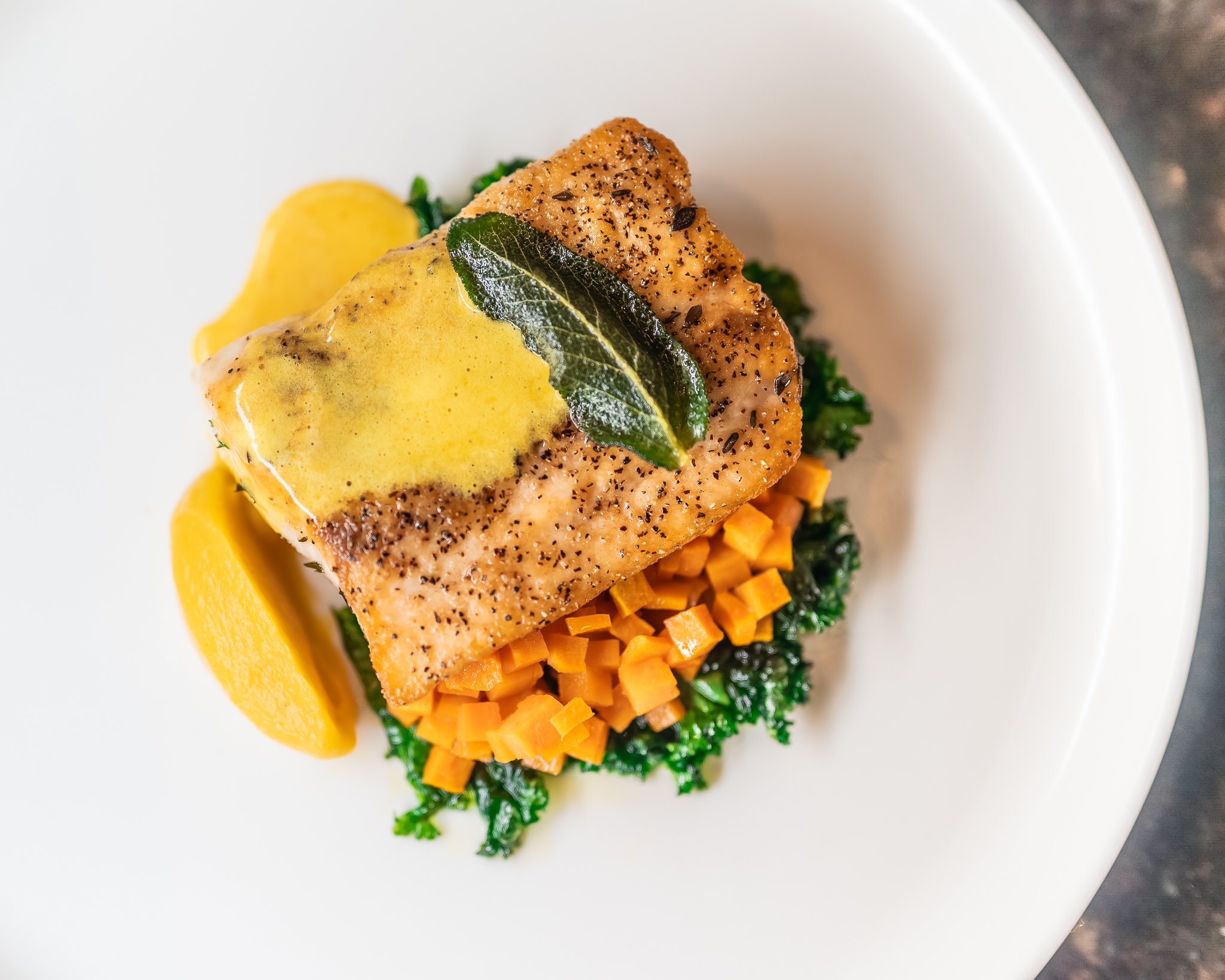
Pan-Seared Arctic Char
Citrus Glaze, Cauliflower Purée, Sautéed Leeks
SIDE
Honey-Thyme Roasted Baby Carrots
Whipped Ricotta, Herb Oil
DESSERT
Warm Spiced Apple Crumble
Vanilla Gelato, Salted Caramel
Sample menu only · Yours is built around your guests and what’s peaking the week of your dinner.
How a Seasonal Menu Gets Built
Four moves anchor the construction of any seasonal private chef menu.
1. Start with what’s actually peaking. Before I think about a protein or a starch, I think about what’s at its absolute best the week of the dinner. If heirloom tomatoes are still going in early September, the menu starts there. If the first frost has hit and Brussels sprouts have sweetened, the menu starts there. The peak ingredient becomes the anchor, and the rest of the courses are designed to make it the focus, not to compete with it.
2. Match technique to ingredient. Cold-weather ingredients ask for slow techniques. Long braises, slow roasting, reductions, cured proteins. Summer ingredients ask for the opposite. Quick sears, raw preparations, light dressings, fresh herb finishes. The technique has to match the ingredient. Trying to braise a summer tomato gives you tomato sauce, which is fine, but it’s not the dinner you wanted.
3. Balance comfort and sophistication. Fall and winter dinners can lean too heavy if every course is a braise. The trick is balancing the richness with one or two brighter moments. A citrus-glazed Arctic char between a bisque and a duck breast, for example. A pomegranate seed garnish that breaks the deeper plate flavors. A lemon panna cotta after a heavier main.
4. Build a cohesive story across courses. A menu reads like a paragraph, not a list. The starter sets up the main. The main sets up the dessert. The flavors should accumulate, not collide. Apple in the starter, apple-brandy on the main, apple in the dessert is too much apple. Apple in the starter, a savory main with no apple, apple in the dessert is a coherent fall progression that doesn’t beat the guest over the head.
Sample Fall and Winter Menu
A representative four-course progression for an October or November dinner:
Starter. Maple-roasted butternut squash soup with sage, toasted pumpkin seeds, and a swirl of maple cream
Main. Pan-seared Arctic char with citrus glaze, cauliflower purée, and sautéed leeks
Side. Honey-thyme roasted baby carrots with whipped ricotta and a thread of herb oil
Dessert. Warm spiced apple crumble with vanilla gelato and salted caramel
Yours gets built around what your guests will love and what’s peaking the week of your dinner. This is one shape, not the answer.
Seasonal Menus Across the Year
The seasonal philosophy runs all four seasons. Each one has its own anchor ingredients, its own technique, its own narrative.
- Spring. Soft shell crab, ramps, English peas, asparagus, rhubarb, the early strawberries from Schartner Farms. See the spring menu page.
- Summer. Heirloom tomatoes from Tiverton, stone fruit, peak local oysters by mid-July, striped bass running through Narragansett Bay. See the summer menu page.
- Fall. Apple-brandy reductions, parsnip puree, pumpkin in the agnolotti and the cheesecake, wild mushrooms from local foragers. See the fall menu page.
- Winter. Long braises, root vegetables roasted hard, blood oranges through January and February, the cold-water oysters that are brinier than the summer ones. See the winter menu page.
For more on the menu-building process, see the personalized menu guide.
What This Means for Your Dinner
Seasonal cooking isn’t a marketing line on the menu card. It’s the difference between a dinner that tastes like a place and a dinner that tastes like a brand. When I source from Newport Seafood for the cod that came in that morning, when I drive to a farm in Tiverton for the squash that was pulled the day before, when I time the menu around the apple varietals that are peaking the week of your event, the dinner gets a depth that doesn’t come from technique alone.
Your guests feel it without naming it. The cod tastes different. The squash soup has body. The apple crumble has structure that no out-of-season apple can give it.
That’s the case for seasonal cooking. The food tastes like the season because the season is on the plate.
PARTUM EVENTS · RHODE ISLAND & MASSACHUSETTS
Ready for a Dinner That Tastes Like the Season?
Send the date, the headcount, and what your guests love. Quote back within 24 hours.
Inquire About Your EventFrequently Asked Questions
What’s the best season for a private chef dinner in Rhode Island?
There isn’t one. Each season has its own strengths. Spring brings rhubarb, soft shell crab, and the first farm produce. Summer brings heirlooms, stone fruit, and peak oysters. Fall brings apple-brandy, parsnip, and wild mushrooms. Winter brings braises, blood orange, and the cold-water oysters at their best. The dinner reflects whatever is peaking the week of your event.
Where do you source ingredients?
Newport Seafood for the fish and shellfish. Aquidneck Meat for the filet, ribeye, lamb, and pork. Clements for produce, including specialty items requested in advance. Narragansett Creamery for the cheese and butter. Schartner Farms in Exeter for berries when they hit. Local farms in Tiverton and Little Compton for heirloom tomatoes and stone fruit. A specialty importer for saffron, truffle oil, and hard-to-find pantry items.
Can a seasonal private chef menu accommodate dietary restrictions?
Yes. Vegan, gluten-free, dairy-free, vegetarian, pescatarian, severe nut allergies, celiac, kosher-style, halal, allergen-specific. The menu has strong plant-forward options in every season (lion’s mane steak, pumpkin agnolotti, butternut squash agnolotti, cauliflower steak with chimichurri, charred corn agnolotti).
How many guests can you cook for?
Private chef dinners start at five guests, and there is no upper limit.
Does seasonal cooking cost more?
Pricing details live in the cost guide.
Do you do seasonal menus in Massachusetts?
Yes. Cape Cod and the Boston metro suburbs are part of the regular service area. The seasonal sourcing pulls from Massachusetts producers (day-boat scallops from the South Shore, oysters from Duxbury and Wellfleet, cranberries from Carver, regional apples) alongside the Rhode Island lineup.
How far in advance should I book?
Two to three weeks for most dinners. Summer Newport weekends and holiday weeks fill earlier. July and August six to eight weeks out. Christmas in October. New Year’s Eve six to eight weeks out at minimum.
Reserve Your Date
If you’re planning a seasonal dinner in Rhode Island or Massachusetts, reach out with the date, headcount, and a rough sense of what you want. A custom menu and quote come back within 24 hours.
For more on the menu-building process, see the personalized menu guide or the private chef cost guide.
Related resource: Visit Rhode Island.
Reserve your seasonal private chef menu date.
Send the date, headcount, and a rough sense of what you want the night to feel like. I’ll come back with a custom menu and quote within 24 hours.
Reserve your date