How to Build a Personalized Menu With a Private Chef
How to Build a Personalized Menu With a Private Chef
A personalized menu private chef builds the dinner around your guests, not a fixed list. The first thing I ask isn’t what you want to eat. It’s what the night actually means to you. An anniversary dinner on a Tuesday in February has a different shape than a family reunion on the porch in July, even if half the dishes overlap. The menu has to know the difference. So before we talk about scallops or short ribs or lamb, we talk about who’s at the table, what you’re celebrating, and what you want the night to feel like when guests leave.
Everything else flows from that conversation. Format. Course count. Protein. Sourcing. Plating style. The pacing between courses. The wine pairings if you want them. Every choice gets made with the rest of the menu in mind, so the dinner reads like one connected meal instead of a string of restaurant dishes.
This is a guide to how that process actually works, from the first phone call to the moment the dessert lands.
Why the Menu Conversation Comes First
The mistake most caterers make is starting with dietary restrictions. They send you a list of mains and ask you to pick three. The menu becomes a checklist. The dinner ends up technically correct and emotionally flat.
Custom-menu work starts somewhere else. I want to know about the people at the table. Who’s the host. Whose birthday it is. Whether the in-laws are meeting the fiancé for the first time. Whether someone’s been on a burrata kick all summer. Whether the dad always orders scallops and we should make sure he gets them. Whether anyone at the table has a deep dislike I should design around so they’re not just tolerating their plate.
Once that’s clear, dietary restrictions, allergies, format preferences, and protein direction all get folded in. The menu becomes a thing built for those specific people, not a list of options pulled from a database.
Choose the Right Format for the Night
The format sets the rhythm of the meal. Five common shapes:
3-course dinner. Appetizer, main, dessert. Best for anniversary dinners, intimate dinners for five to eight guests, weeknight bookings, and any event where you want the food to be excellent without dominating the night.
4-to-5-course dinner. The signature format. Starter, salad, fish or pasta course, main, dessert. Best for milestone celebrations, dinner parties of five guests and up, and any event where the dinner is the event.
Chef’s tasting menu. Five to seven smaller courses, chef-directed, often paired with wine. Best for guests who want me to drive the menu rather than choosing dish by dish. Best for couples celebrating something specific, anniversary dinners where the food is half the gift, and the kind of Saturday night that earns the dinner.
Family-style. Shareable platters at the center of the table, plus a salad course and a dessert course. Best for the dinners that want to feel communal and unhurried. Often the right call for vacation rentals and bachelorette weekends.
Brunch and lunch. Lighter, daytime focus. Plated or family-style. See the private chef brunch page for the full brunch format.
Build the Menu Around What’s Actually in Season
The menu reflects what’s peaking the week of your dinner, not what’s available year-round from a distributor. That’s the difference between a dinner that tastes like a season and a dinner that tastes like a chain restaurant.
Spring brings rhubarb, ramps, English peas, asparagus, soft shell crab, and the early strawberries from Schartner Farms in Exeter. Summer brings heirloom tomatoes from the farms in Tiverton and Little Compton, stone fruit, peak local oysters by mid-July, striped bass running through Narragansett Bay. Fall brings apple-brandy reductions, parsnip puree, pumpkin in the pasta and the cheesecake, wild mushrooms from local foragers. Winter brings long braises, root vegetables roasted hard, blood oranges through January and February, and the cold-water oysters that are brinier than the summer ones.
Each season has its own menu, with its own anchor dishes. See the spring, summer, fall, and winter menus for what’s actually peaking right now.
SAMPLE PERSONALIZED MENU
An Anniversary Dinner
FOUR COURSES · SIX GUESTS · EARLY SUMMER
FIRST
Lobster Bisque
Finished Tableside, Crème Fraîche, Dill Oil
SECOND
Little Gem Salad
Shaved Fennel, Citrus Segments, Almonds, Meyer Lemon Vinaigrette
MAIN
Pan-Seared Halibut
Sweet Corn Velouté, Glazed English Peas, Preserved Lemon Jus
DESSERT
Lemon Panna Cotta
Macerated Berries, Shortbread Crumble
Sample menu only · Yours is built around your guests, your occasion, and what’s peaking the week of your dinner.
The Protein. And Why It’s Not Always the Starting Point.
Most people think of menu design as picking the protein first and building around it. The protein matters, but it’s not always where I start. Sometimes a menu gets anchored by an ingredient that’s at peak that week. Heirloom tomatoes in August. Apple-brandy in October. The first soft shell crab in May. The protein gets chosen to make that ingredient the centerpiece. The first heirloom of the season can carry a whole dinner. The protein just has to know not to fight it.
Three common protein directions:
Seafood-forward. Scallops, halibut, Chilean sea bass, lobster, soft shell crab, salmon. Best for Newport-area dinners that want to feel like they’re on the coast. Best for guests who want lighter, brighter food. Best for summer.
Meat-and-celebration. Filet mignon, ribeye, lamb (rack or loin), duck breast, pork loin and belly duo, beef Wellington bites for cocktail hour. Best for milestone dinners, fall and winter, and any event where you want the protein to be the part everyone remembers.
Plant-forward as a full course, not a compromise. Lion’s mane steak with chimichurri. Pumpkin agnolotti. Cauliflower steak. Butternut squash agnolotti with brown butter sage. King oyster scallops with cider beurre blanc. The vegetarian or vegan dish gets the same plating attention and ingredient quality as the meat plate. Nobody at the table feels like they’re getting the side option.
Sample Personalized Dinner Menu
A representative four-course progression for a six-guest anniversary dinner in early summer:
First. Lobster bisque, finished tableside with crème fraîche and a thread of dill oil
Second. Little gem salad with shaved fennel, citrus segments, almonds, and meyer lemon vinaigrette
Main. Pan-seared halibut with sweet corn velouté, glazed English peas, and preserved lemon jus
Dessert. Lemon panna cotta with macerated berries and shortbread crumble
Yours gets built around what your guests will love and what’s peaking the week of your dinner. This is one shape, not the answer.
How Each Course Sets Up the Next
A good menu reads like a paragraph, not a list. Each course earns the next.
Richness and acidity in balance. A heavy main needs a bright starter. A creamy bisque wants a citrusy salad to follow. A buttery dessert needs an acid note somewhere earlier in the meal.
Texture contrast. Crisp before tender. Soft after crunchy. The plates that feel monotonous are usually monotonous in texture, not flavor.
Flavor intensity climbing. Light to heavy across the meal. The biggest flavor lands at the main, not at the start. Save the duck or the lamb or the brown-butter-and-sage for the third course, not the first.
Visual composition. Plates should look distinct from one another across the meal. If the starter is white-on-white, the main shouldn’t be. If the salad is layered tall, the next course should be plated low.
If we’re pairing wine, all of the above gets cross-checked against what’s in the glass.
Plating and Presentation
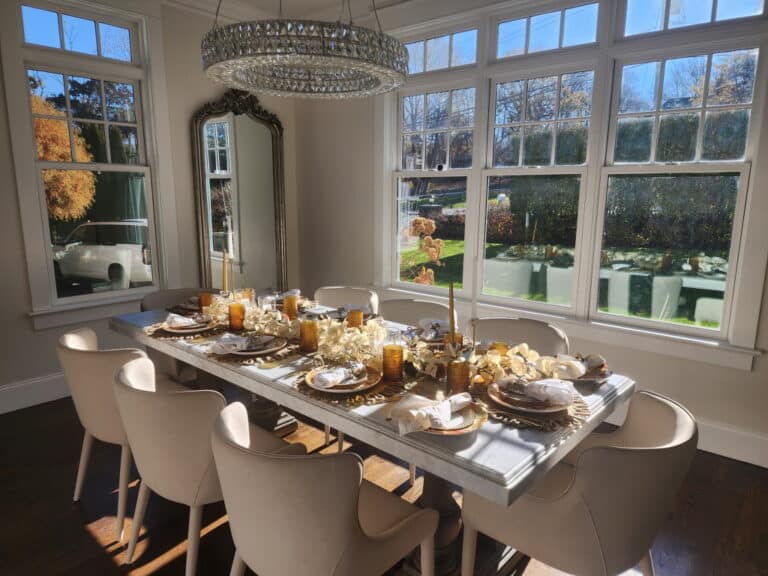
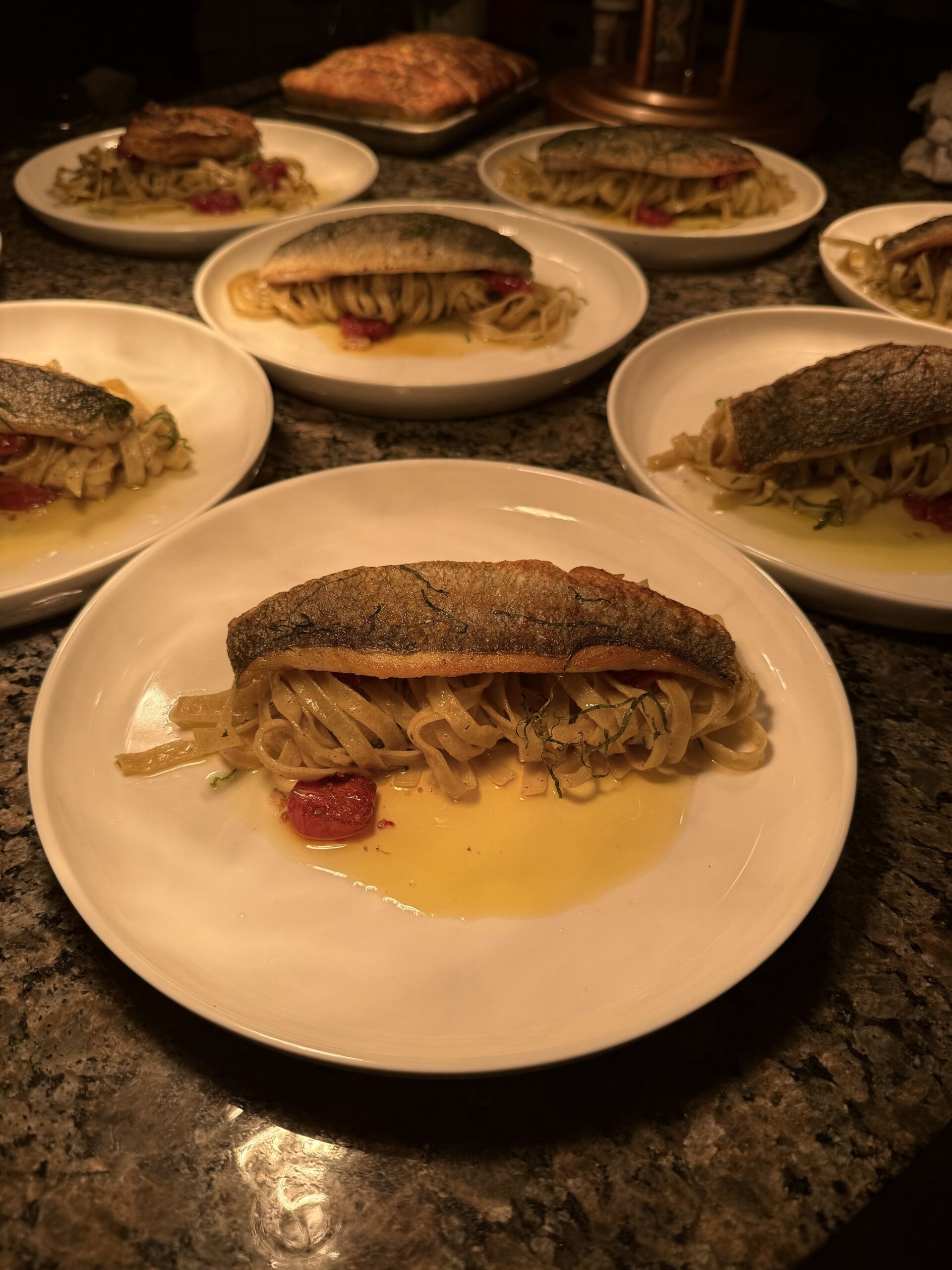
Plating style matches the event. A 4-course anniversary dinner gets precise, restrained plates with negative space and intentional placement. A family-style summer dinner on a porch gets generous platters in the center of the table, family-passed, looking like food that wants to be eaten, not photographed.
Both styles get the same care. Different formats, different visual outcomes.
The Final Review Before Your Event
Forty-eight to seventy-two hours before the dinner, we do a final menu confirmation. Every dish gets reviewed. Every allergy gets re-confirmed. The timing of arrival, the courses, and any special touches (a candle on a dessert plate, a specific song queued for a moment) get nailed down.
Day of the event, I arrive 2.5 hours before guests. Prep, mise en place, set up. By the time the first guest is at the door, the kitchen is ready. After the meal, I do a full kitchen cleanup and pack any leftovers in labeled containers. The kitchen looks like the morning, not like a dinner happened.
The Booking Timeline
One to two weeks out. Discovery conversation. The “what does this night mean to you” conversation.
Five to seven days out. Custom menu draft delivered. You approve, change, or swap before I shop.
Forty-eight to seventy-two hours out. Final confirmation.
Day of. I arrive early, prep, cook, plate, serve, clean. You don’t touch a dish.
Lead times. Two to three weeks for most dinners. Summer Newport weekends and holiday weeks fill earlier. July and August six to eight weeks out. Christmas in October. New Year’s Eve six to eight weeks out at minimum.
PARTUM EVENTS · RHODE ISLAND & MASSACHUSETTS
Ready to Build Your Menu?
Send the date, the headcount, and what your guests love. Quote back within 24 hours.
Inquire About Your EventFrequently Asked Questions
How does the menu personalization process actually work?
We start with a conversation. Date, headcount, occasion, what your guests love, what you’re tired of, any allergies or dietary restrictions, format preferences. From that, I send a custom menu draft within five to seven days. You approve, change, or swap. Forty-eight to seventy-two hours before the dinner, we do a final confirmation. The whole process is collaborative, not a fixed-menu pick-three.
How far in advance should I book?
Two to three weeks for most dinners. Summer Newport weekends and holiday weeks fill earlier (July and August six to eight weeks out, Christmas in October, New Year’s Eve six to eight weeks out).
Can you accommodate dietary restrictions?
Yes. Vegan, gluten-free, dairy-free, vegetarian, pescatarian, severe nut allergies, celiac, kosher-style, halal, allergen-specific. ServSafe Food Protection Manager and ServSafe Allergen certified. The menu is built around the most restrictive eater so no one gets an afterthought plate.
What’s a chef’s tasting menu?
Five to seven smaller courses, chef-directed. You hand the menu over to me and I drive the progression. Often paired with wine. Best for guests who want the chef to make every call rather than choosing dish by dish.
What’s the ideal course count?
Four courses is the most common: starter, salad, main, dessert. Five courses adds a fish or pasta course before the main and works well for milestone events. Three courses is the right call for weeknight dinners, small, intimate dinners, and any night where you want the food to be excellent without taking over the evening.
What’s the difference between a private chef and a caterer?
Every dish is cooked to order in your kitchen the night of the dinner. Not reheated from a van. Not held in warming trays. Not a buffet line. The chef is there for the entire night cooking, plating, serving, and cleaning up. See private chef vs catering for the full comparison.
Can I change the menu after the first draft?
Yes. The first draft is a starting point. Most clients send notes back with swaps, additions, or restrictions I missed in the first conversation. We iterate until the menu reflects what you actually want.
What’s the price range?
Pricing details live in the cost guide.
How many guests can you cook for?
Private chef dinners start at five guests, and there is no upper limit.
Reserve Your Date
If you’re planning a dinner in Rhode Island or Massachusetts, reach out with the date, headcount, occasion, and what your guests love. A custom menu and quote come back within 24 hours.
For pricing context, see the private chef cost guide. For other formats, see the private chef brunch page, the hors d’oeuvres page, or the holiday menu page.
Related resource: U.S. Personal Chef Association.
Reserve your personalized menu private chef date.
Send the date, headcount, and a rough sense of what you want the night to feel like. I’ll come back with a personalized menu private chef and quote within 24 hours.
Reserve your date