How to Host an Elegant Dinner Party With Zero Stress
How to Host an Elegant Dinner Party With Zero Stress
An elegant dinner party at home runs differently from a restaurant night. The dinner parties everyone remembers have one thing in common. The host wasn’t running. They were sitting at the table, glass in hand, having an actual conversation with their guests. The food landed when it was supposed to land. The plates got cleared between courses without anyone visibly clearing them. The music was right. The candles were already lit when the first guest walked in.
What you don’t see at those dinner parties is the host running back to the kitchen six times during the meal, pulling something off the stove, rinsing a hand, missing the toast their best friend just made because they were checking on the dessert.
This post is about how to host the first kind of dinner party, not the second. The short version is that you don’t do all the cooking yourself. The long version is everything below.
Let the Menu Be Seasonal
The first move is the menu. Build it around what’s actually peaking the week of the party, not what looks good on a printed list of recipes. A peach in early August is a different ingredient from a peach in February. Heirloom tomatoes from a farm in Tiverton in late August are different from the year-round greenhouse ones. Soft shell crab in May is different from the frozen one. The food you put on the table will taste different depending on whether the menu was built around the season or against it.
A four-course shape works for most dinner parties. Appetizer or starter. Two entrées (one savory anchor, one bridge course like a fish or pasta). A shared side passed family-style. A plated dessert.
Spring leans toward soft shell crab, lamb, asparagus, rhubarb, the early strawberries. Summer leans toward tomatoes, stone fruit, scallops, peak oysters by mid-July. Fall leans toward apple-brandy reductions, parsnip, pumpkin in the pasta. Winter leans toward braises, blood orange, and duck. For the full seasonal menus, see spring, summer, fall, or winter.
Keep the Table Elegant but Simple
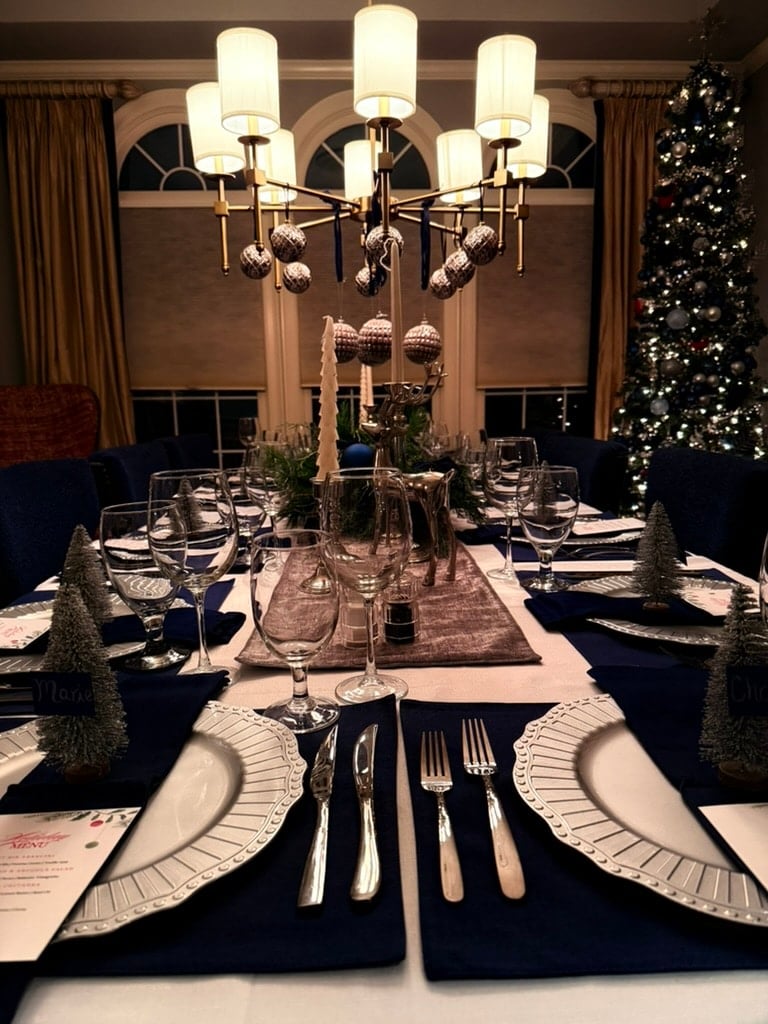
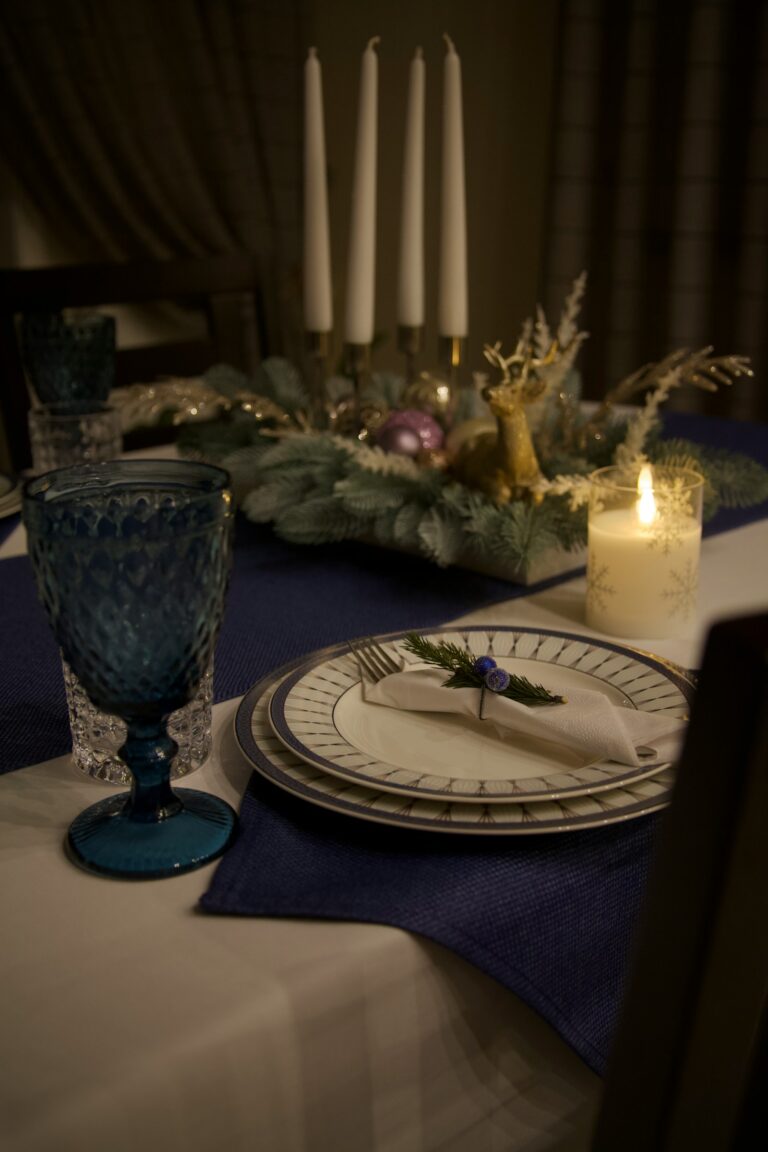
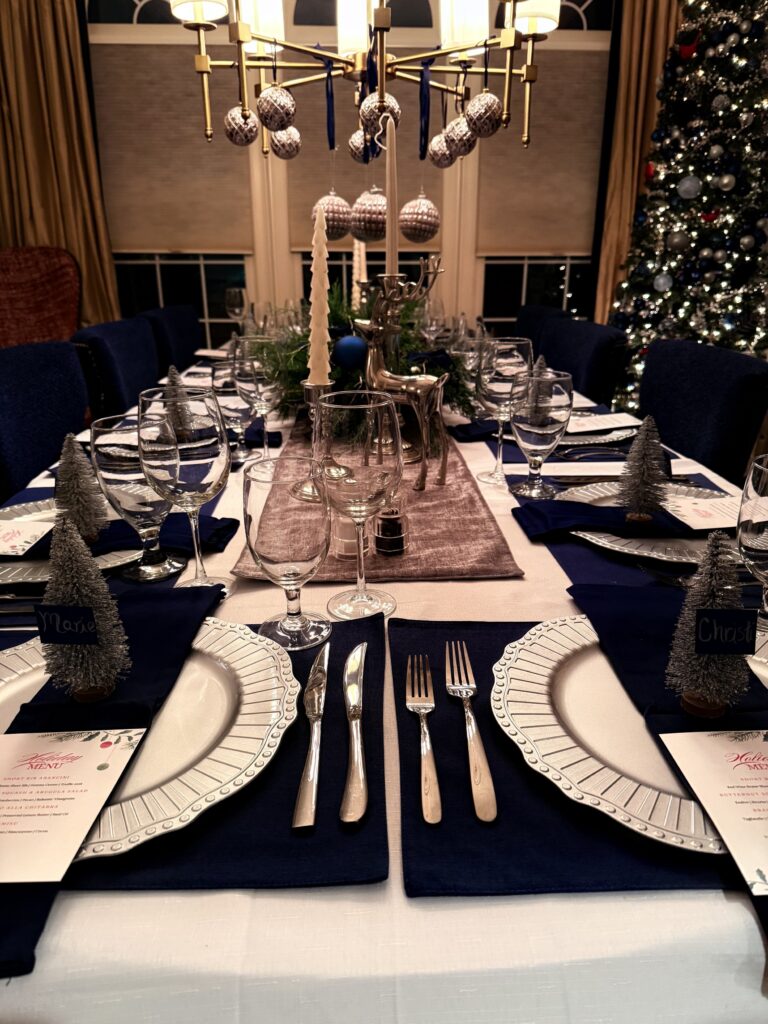
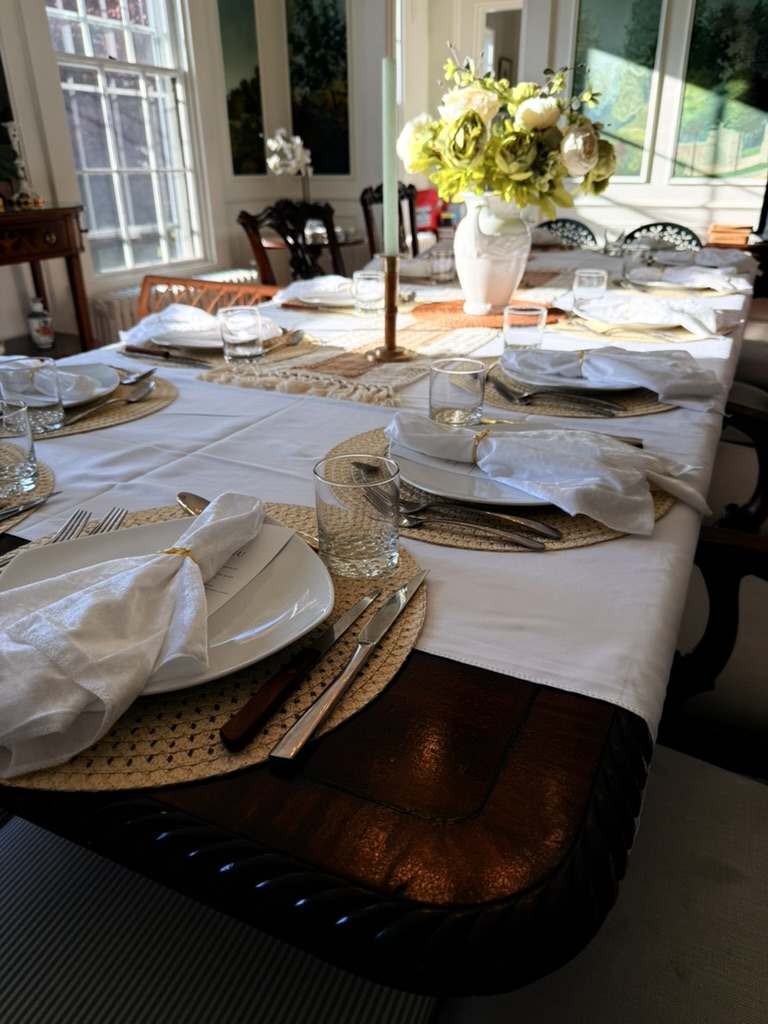
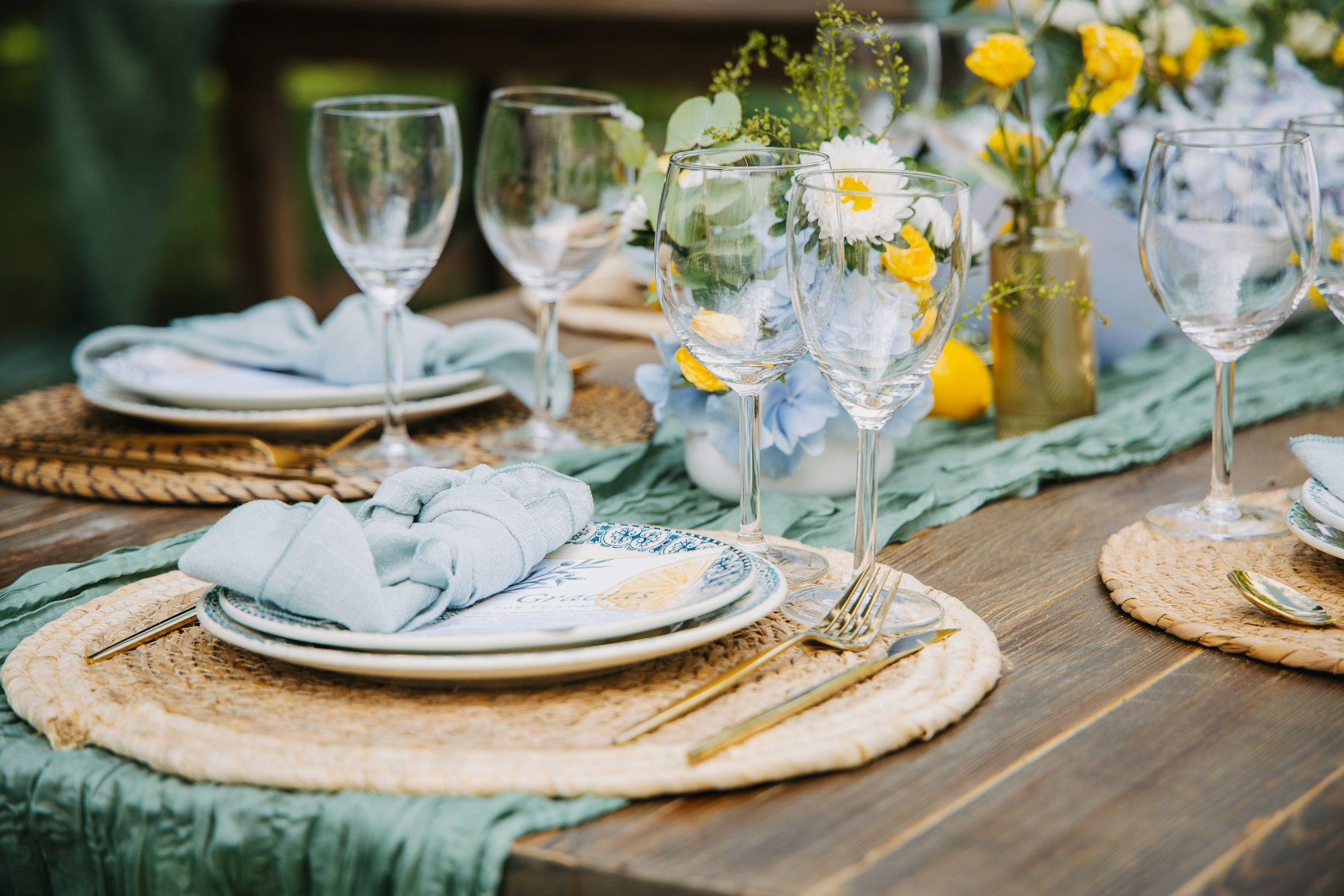
The table sets the tone before the food does. The mistake most home dinner parties make is overdoing it. Too many serving pieces, too much florals, place cards when the table is six people who already know each other.
The version that works is closer to a French country dinner table than a wedding reception:
- Soft linens. Even just unbleached cotton works.
- Neutral plates. White or cream. The food provides the color.
- Real glassware. Wine glasses you actually use, not the wedding crystal.
- Candles. Tapers in low brass holders or pillar candles in glass. Warm light only.
- Florals if you want them, low and loose. Nothing tall enough to block sightlines.
- A bread plate or a butter dish per couple. A small pepper grinder.
The goal is calm, not clutter. A table that says someone thought about it but didn’t try too hard.
SAMPLE DINNER PARTY MENU
A Saturday Dinner
FOUR COURSES · TWELVE GUESTS
STARTER
Heirloom Tomato & Burrata
Arugula, Basil Oil, Aged Balsamic, Sea Salt
FISH
Crispy-Skinned Sea Bass
Sweet Corn Velouté, Glazed Peas, Preserved Lemon Jus
MAIN
Filet Mignon
Red Wine Reduction, Cauliflower Potato Puree
DESSERT
Chocolate Hazelnut Tart
Salted Caramel, White Chocolate Whipped Cream
Sample menu only · Yours is built around your guests and what’s peaking the week of your dinner.
Curate the Flow of the Evening
A dinner party has a rhythm, the same way a play has acts. Five moments anchor most evenings:
1. Welcome and arrival. Light bites or a welcome cocktail. Guests get a drink in hand within ninety seconds of taking their coats off. A small passed plate or a single charcuterie board on the kitchen island. The room should feel like the party already started.
2. The seated meal. Plated or family-style, depending on the formality. Plated lands the food in front of every guest at the same time. Family-style passes the platters around the table and lets people serve themselves. Both work. The right choice depends on the room and the energy you want.
3. A pause between mains and dessert. A palate cleanser. A second pour. A few minutes for guests to push back from the table and stretch. The pause is where the toasts happen, where the conversation goes deeper, where the night earns the dessert.
4. The dessert. Plated, beautiful, and timed for the moment when guests are full but not done. A pavlova with macerated berries. A sticky toffee pudding. A chocolate hazelnut tart with salted caramel.
5. Coffee, espresso, or after-dinner drinks. The wind-down. Move guests to a different room or a porch if you have one. Espresso, an amaro, a cordial, a tea. The food is done. The conversation isn’t.
Hire a Private Chef to Handle Everything
This is the move that turns hosting from a juggling act into actual hosting. A private chef plans the menu, sources the ingredients, preps in their own kitchen, arrives at your house 2.5 hours before guests, sets up a working line in your kitchen, cooks every course on-site, plates each one, runs the service, refills water, clears plates, and cleans the kitchen completely before leaving.
You set the table. You greet guests at the door. You sit at your own dinner. That’s the whole hosting job.
For more on what a private chef does behind the scenes, see a behind the scenes look at how private chefs prep or what to expect when hiring a private chef.
A Few Things to Get Right
Lighting. Lower than you think. Overhead lights kill mood. Use candles and table lamps. Dim everything else by 50%.
Music. Chosen ahead, low, and not the radio. A playlist that fits the meal and the people. Something instrumental during dinner, something with vocals after.
Pacing. Don’t rush the meal. A four-course dinner for eight should run two-and-a-half to three hours from arrival to dessert. Food that lands in fifteen minutes flat is a buffet, not a dinner party.
Wine. One bottle of red and one of white per three guests. A bubble option for arrivals. If you don’t drink, sparkling water in a glass pitcher with a citrus garnish.
The first toast. Brief. To the host, to the occasion, to the guests, in that order. If you’re the host, accept it gracefully and make a smaller one back.
What “Zero Stress” Actually Means
It doesn’t mean nothing happens. It means nothing requires you. The chef is in the kitchen handling the food. The dessert is plated when the table is ready for it. The kitchen gets reset while you’re saying goodnight at the door.
You set the table the way you want it. You curate the music and the guest list. You greet your guests, sit at your own dinner, and make your own toast. Everything else is handled.
That’s the whole goal of hiring a private chef for a dinner party. The host gets to host. The dinner gets to be a dinner.
PARTUM EVENTS · RHODE ISLAND & MASSACHUSETTS
Skip the Stress. Sit at the Table.
Send the date, the headcount, and the room you’re hosting in. Quote back within 24 hours.
Inquire About Your Dinner PartyFrequently Asked Questions
How many guests is the right size for an elegant dinner party?
Any group from five guests up works. Small enough that the conversation stays at one table, big enough to feel like an event. Twelve guests around a long dining table with two candle clusters and warm light is the format most dinner parties want.
What’s the price range for a private chef dinner party?
Pricing details live in the cost guide.
How far in advance should I book the chef?
Two to three weeks for most dinner parties. Summer Newport weekends and holiday weeks fill earlier. July and August six to eight weeks out. Christmas in October. New Year’s Eve six to eight weeks out at minimum.
Can the chef accommodate dietary restrictions?
Yes. Vegan, gluten-free, dairy-free, vegetarian, pescatarian, severe nut allergies, celiac, kosher-style, halal, allergen-specific. The menu is built around the most restrictive eater so no one ends up with a salad while everyone else has duck breast.
Plated or family-style for a dinner party?
Plated is more formal and lands every plate at the table at the same time. Family-style is communal, slower, and tends to feel more like the meal stretches into the night. The right choice depends on the room and the energy you want. We figure it out during the consultation.
What about the bar?
I don’t bartend, but I help plan the wine pairings if you want them. For a more involved bar setup, hire a bartender separately. For most dinner parties, a short wine list and a self-serve cocktail station handle drinks just fine.
Does the chef bring everything or do I need to provide things?
I bring knives, mise en place containers, plating tools, sheet trays, and any specialty equipment for the menu. You provide the working kitchen, the dining table, the plates, the linens, the wine, and the music. For more on the prep process, see behind the scenes look at how private chefs prep.
What does the chef do during the dinner itself?
I cook every course in your kitchen, plate each one, run the service, refill water, clear plates between courses, and stay in the kitchen between courses to get the next one ready. After dessert lands, I do a full kitchen reset before leaving. The kitchen looks like the morning, not like a dinner happened.
Reserve Your Date
If you’re planning a dinner party in Rhode Island or Massachusetts, reach out with the date, headcount, and a rough sense of what you want the night to feel like. A custom menu and quote come back within 24 hours.
For more on the booking process, see what to expect when hiring a private chef or the personalized menu guide. For pricing, see the private chef cost guide.
Related resource: Visit Rhode Island.
Reserve your elegant dinner party date.
Send the date, headcount, and a rough sense of what you want the night to feel like. I’ll come back with a custom menu and quote within 24 hours.
Reserve your dateI cook elegant dinner parties across Newport, Middletown, Jamestown, Tiverton, and Little Compton, plus Providence and East Greenwich on weekday dates.